
(HCMC) On the morning of June 26, 2026, the Ho Chi Minh City Digital Transformation Center, in coordination with the Ho Chi Minh City Computer Association (HCA), hosted a working session with the Institute for Information Industry (III) of Taiwan and a delegation of Taiwanese technology enterprises.
In his opening remarks, Mr. Hoang Minh Anh Tu, Vice President of HCA, expressed his honor in connecting the delegation to the City Digital Transformation Center. He expressed his expectation that the working session would serve as a practical bridge for both sides to exchange advanced technological solutions, particularly in the fields of smart transportation and smart city development.
Ensuring Infrastructure and Training & Capacity Building Operations
At the meeting, Mr. Nguyen Thanh Hoa, Deputy Director of the Digital Transformation Center, delivered a welcoming speech to the Taiwanese delegation. He also shared the key tasks the Center is currently focusing on, with digital infrastructure and data being the top priority. The Center is operating synchronized digital systems and platforms connecting 168 wards, communes, and special zones, as well as municipal departments, ensuring data interoperability and integrity across the City.
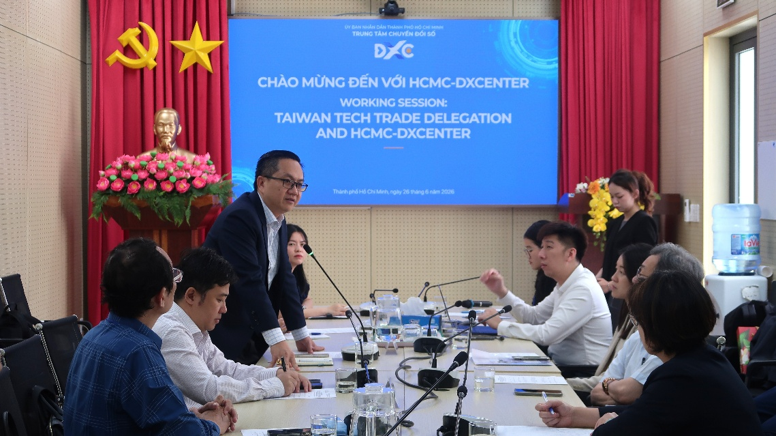
Mr. Nguyen Thanh Hoa, Deputy Director of the City Digital Transformation Center, speaking at the working session.
Furthermore, the BOD of the Digital Transformation Center emphasized the philosophy of sustainable development through the pillar of digital education: Digital transformation is primarily a revolution in mindset, not just in technology. Over the past year, the Center successfully organized 118 short-term training courses, reaching over 30,000 learners citywide.
Solving Urban Challenges with Technological Solutions
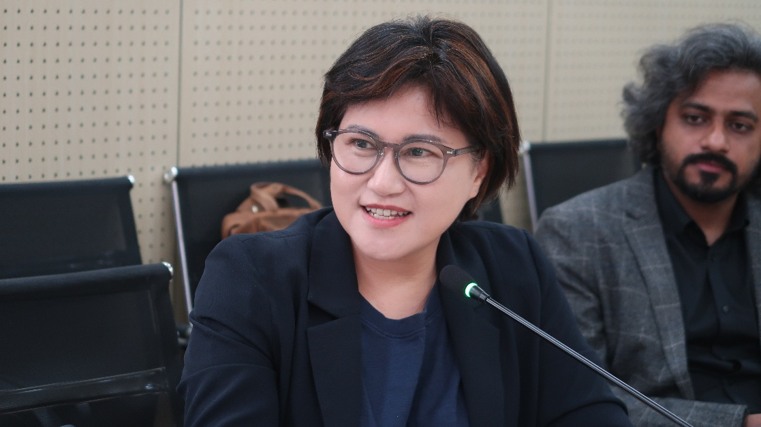
Ms. Vivian Huang, Representative of the Institute for Information Industry (III) of Taiwan, speaking at the working session.
Appreciating the insights from the Center, Ms. Vivian Huang, Representative of the Institute for Information Industry (III) of Taiwan, shared the fact that Taiwan possesses over 10 years of practical experience in deploying Smart City programs. Through the "Taiwan Digital Day" program (authorized by the Administration for Digital Industries under Taiwan's Ministry of Digital Affairs), the delegation brings up technological solutions that have been internationally verified and standardized.
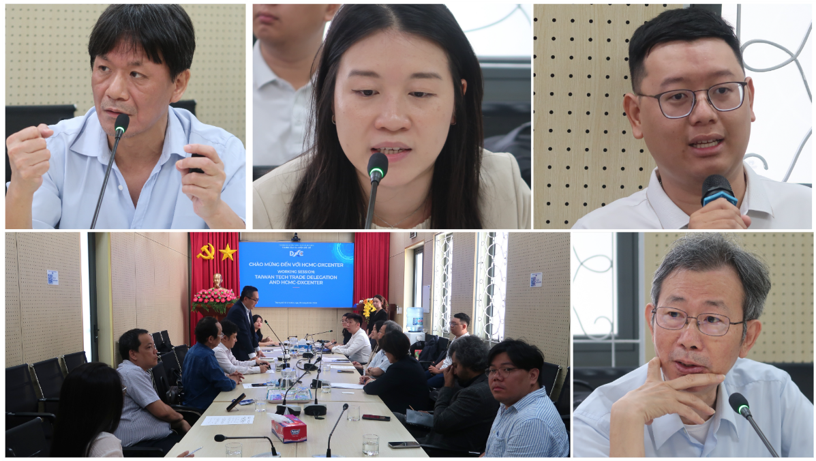
Representatives of Taiwanese technology enterprises sharing tech solutions at the working session.
The Taiwanese delegation proposed technological solutions highly compatible with four major urban challenges that HCMC is focusing on by 2030, which include: Traffic (reducing congestion), flood prevention, environmental pollution control, and crime/drug prevention using Artificial Intelligence (AI).
- Sensor systems and AI urban coordination: This is a smart governance system utilizing AI cameras, IoT sensors, and a centralized data management platform to optimize traffic flows and provide real-time flood warnings.
- Green Energy & Battery Energy Storage Systems (BESS): A representative from KAS Technology Corporation (Taiwan) presented a new-generation Lithium-ion battery solution (featuring ultra-fast charging under 5 minutes, a lifespan of over 20 years). This solution is designed to build autonomous micro-grids, making it highly suitable for critical infrastructures, AI data centers, or applications in remote areas (such as the Mekong Delta region) to reduce dependence on the national power grid.
Notably, the Taiwanese business representatives expressed that their goals go beyond commercial exports; they desire to seek strategic partners in Vietnam for technology transfer, progressing toward domestic manufacturing to optimize costs and bring high – tech solution deeper into the local populace.
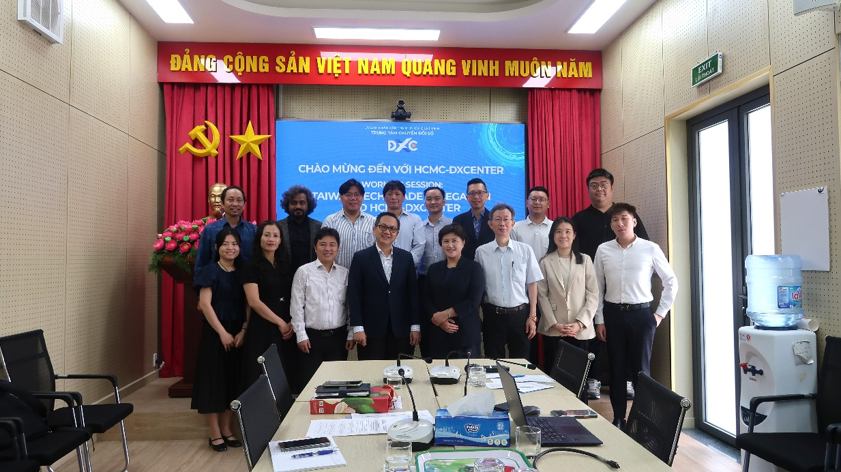
Representatives of both sides taking a commemorative photo at the working session.
The working session concluded with a successes, demonstrating the scientific and pioneering problem-solving approach of the HCMC Digital Transformation Center alongside the advanced technological capabilities from Taiwan. It laid a solid foundation for substantive digital transformation cooperation projects in the upcoming phase.


