
On June 11, 2026, the Ho Chi Minh City Digital Transformation Center held a working session with a delegation from the Danish Embassy and representatives of Front Desk to exchange and share international experiences regarding solutions to enhance citizen service efficiency in the public administration sector.
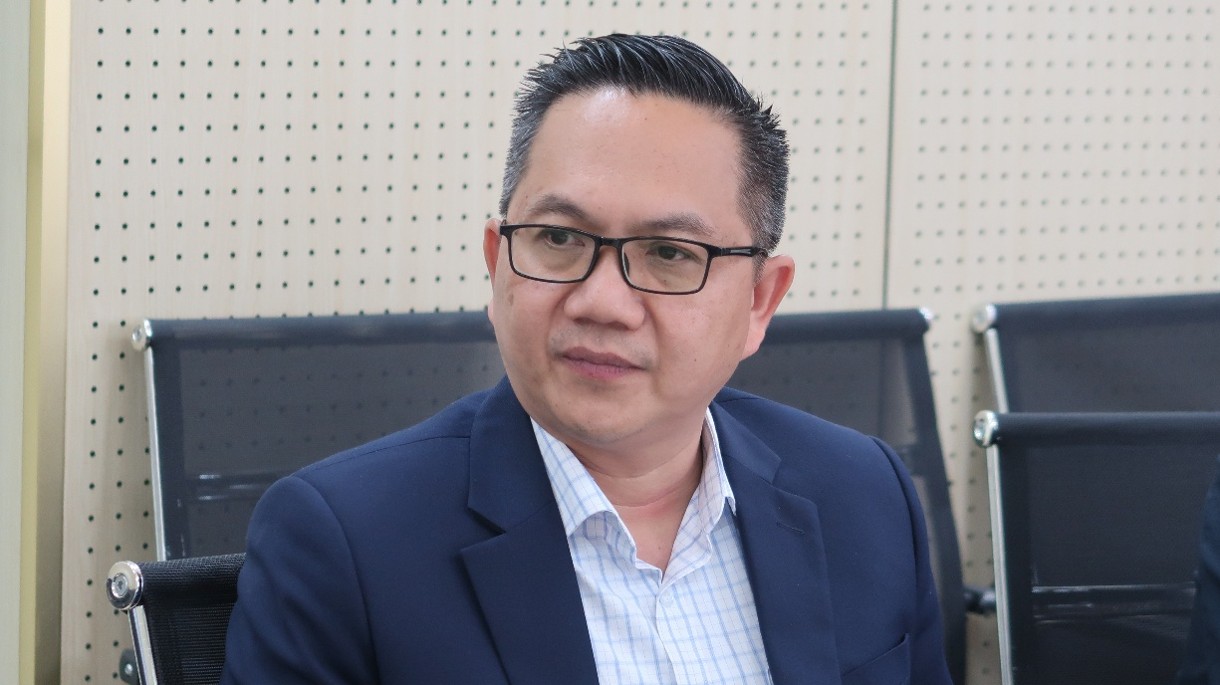
Mr. Nguyen Thanh Hoa – Deputy Director of the City Digital Transformation Center, sharing insights during the working session with the Danish Embassy delegation.
During the meeting, Mr. Nguyen Thanh Hoa, Deputy Director of the City Digital Transformation Center, introduced the strategic orientations and outstanding results in deploying Ho Chi Minh City's digital transformation program. A primary focus is building a shared data infrastructure, promoting data connection and sharing among agencies and units. Simultaneously, the City is enhancing the application of data analytics to serve management, executive operations, and support the decision-making processes of leaders at all levels.
Furthermore, the City is gradually forming a digital ecosystem connecting state agencies, enterprises, research institutes, universities, and innovation organizations. This creates a foundation for the synchronized development of science and technology, the digital economy, and the digital society. This is considered one of the critical factors in elevating competitiveness and driving sustainable growth in the new phase.
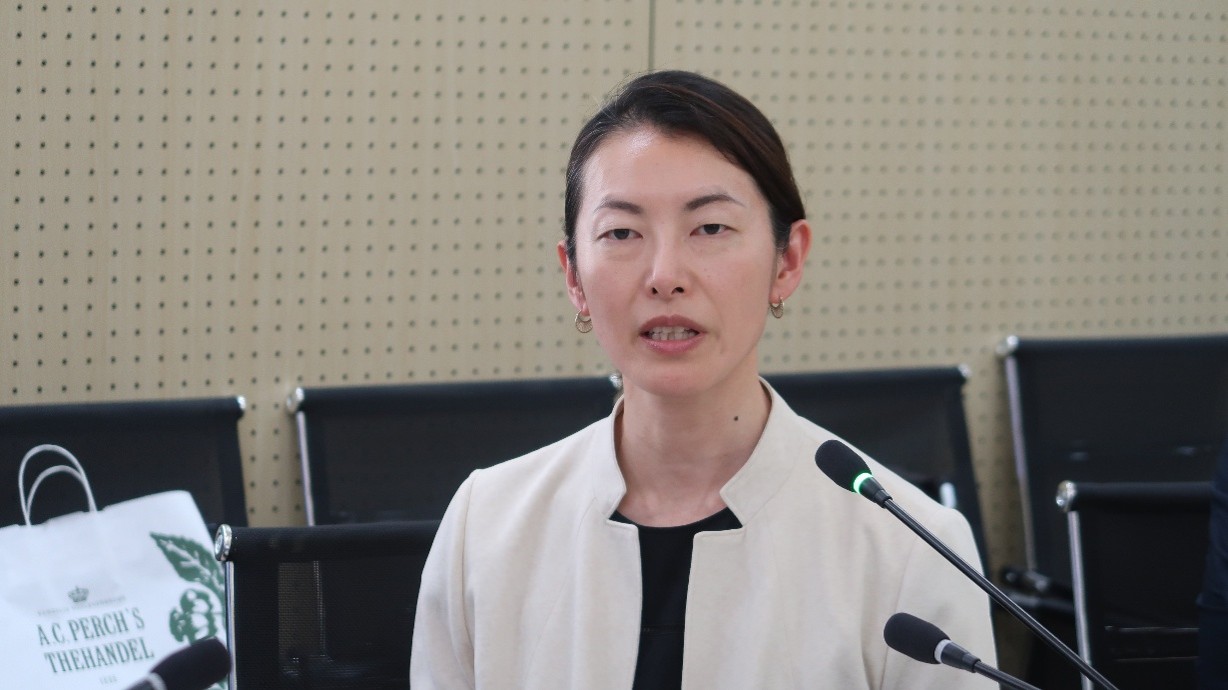
A representative from Front Desk introducing the electronic queue and appointment management model.
On the Danish side, representatives from Front Desk introduced the electronic queue and appointment management model currently being deployed across numerous public authorities in Denmark and several other countries. According to the company, this solution is designed to enhance the citizen experience when conducting administrative procedures while assisting state agencies in optimizing resources and service workflows.
A key topic of discussion was the ability for citizens to proactively book online appointments before visiting administrative offices. This helps reduce waiting times, logically distributes the volume of incoming visitors across different time slots, and increases proactiveness for both citizens and service providers.
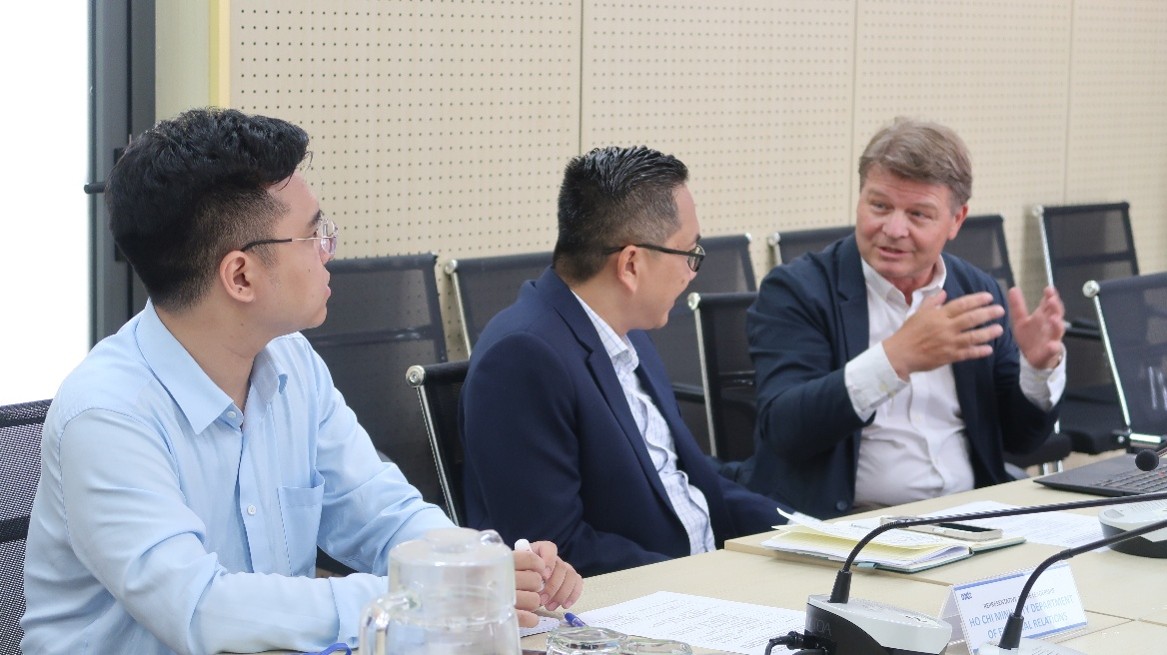
A representative from Front Desk sharing experiences on applying technology to support remote application intake.
The Danish delegation also shared experiences in applying technology to support remote application intake, allowing citizens to supplement information and documents prior to executing procedures in person. Based on practical experience in various countries, this approach significantly mitigates the issue of incomplete applications and enables specialized officials to proactively pre-screen citizen requests.
Beyond citizen-facing utilities, the solution offers real-time data analytics and statistical tools. These assist management agencies in evaluating service demand, identifying workflow bottlenecks, and providing a data-driven basis for appropriate resource allocation. This aligns perfectly with the HCMC Digital Transformation Center's focus on promoting data-driven governance aimed at enhancing executive efficiency and service quality.
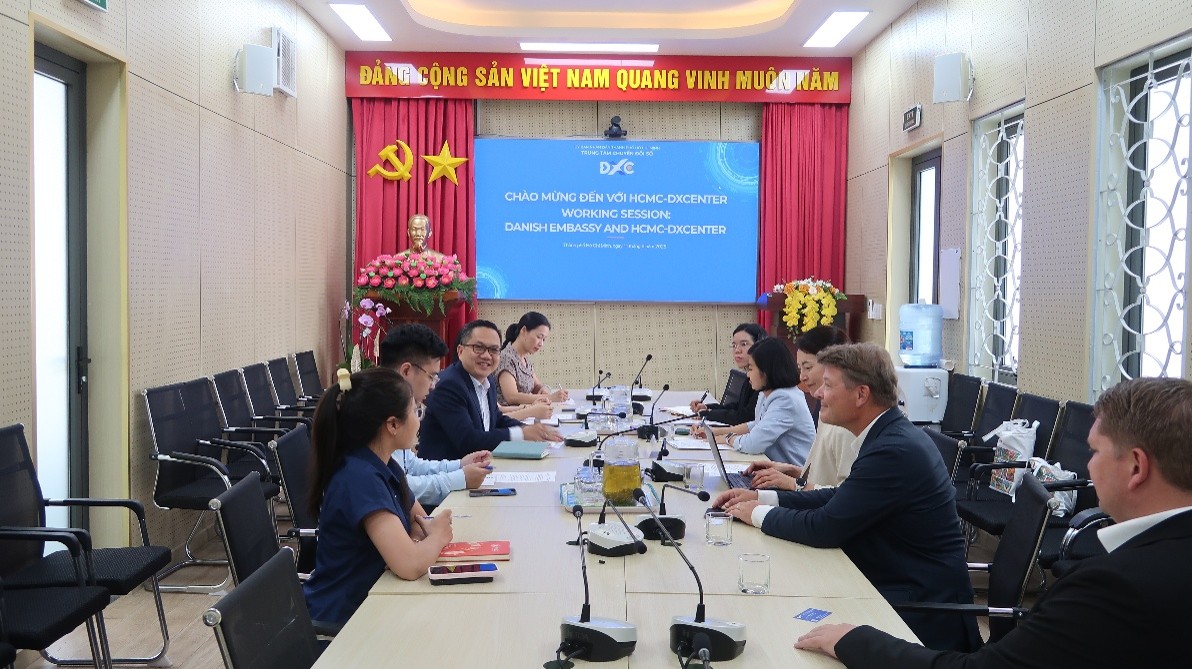
Overview of the working and exchange session.
During the meeting, both sides further discussed the potential integration of these citizen service management solutions with the City's existing digital ecosystem, including the Ho Chi Minh City Digital Citizen App, the 1022 Incident Reporting System, online public service platforms, and the VNeID electronic identity system.
Notably, experiences from Denmark highlight that applying technology in public service delivery must be implemented with a citizen-centric approach, ensuring seamless access and usability for all demographics. Specifically, the elderly and those with limited access to technology require appropriate support to ensure no one is left behind in the digital transformation process.
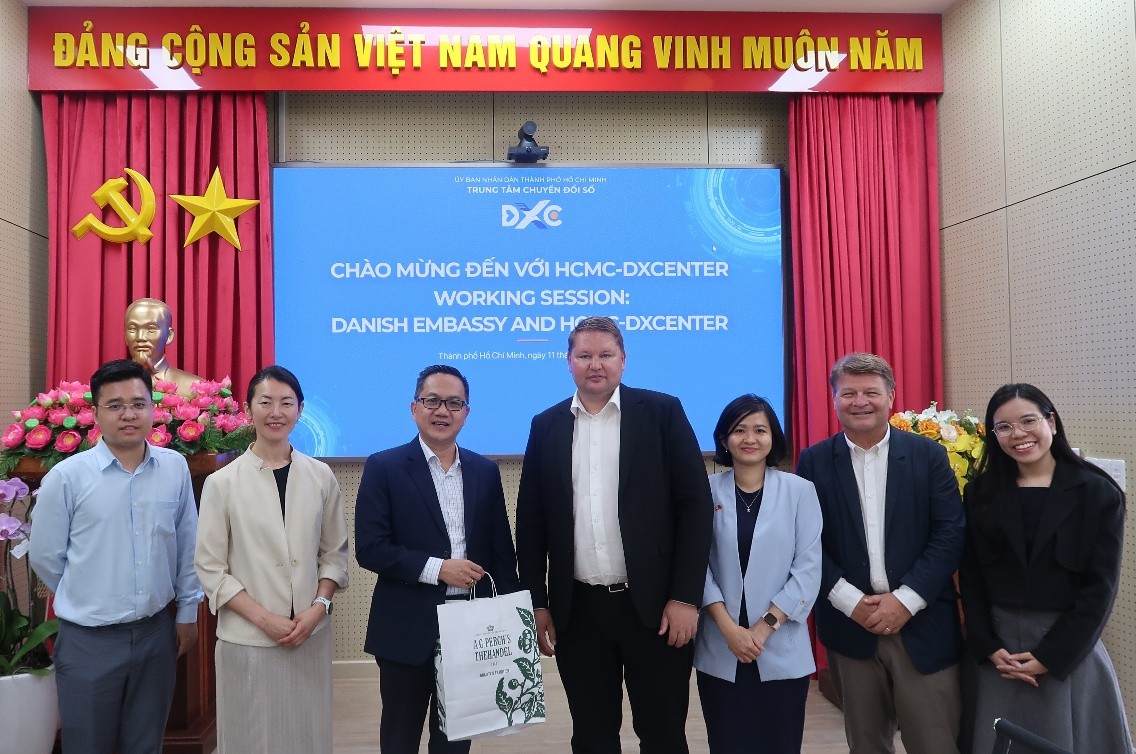
The Danish Embassy delegation taking a commemorative photo with the leadership of the HCMC Digital Transformation Center and representatives from the Department of Foreign Affairs.
The working session provided a valuable opportunity for the City Digital Transformation Center to reference international experiences, models, and solutions while researching and proposing initiatives to build a digital government. This aims to elevate public service quality and better satisfy the evolving needs of citizens and businesses in Ho Chi Minh City. By strengthening exchanges and learning from countries with advanced digital administrations, Ho Chi Minh City reaffirms its strong commitment to building a modern, transparent, and efficient public administration that centers on serving citizens and enterprises.


